What Is a Stage 2 Pressure Ulcer?
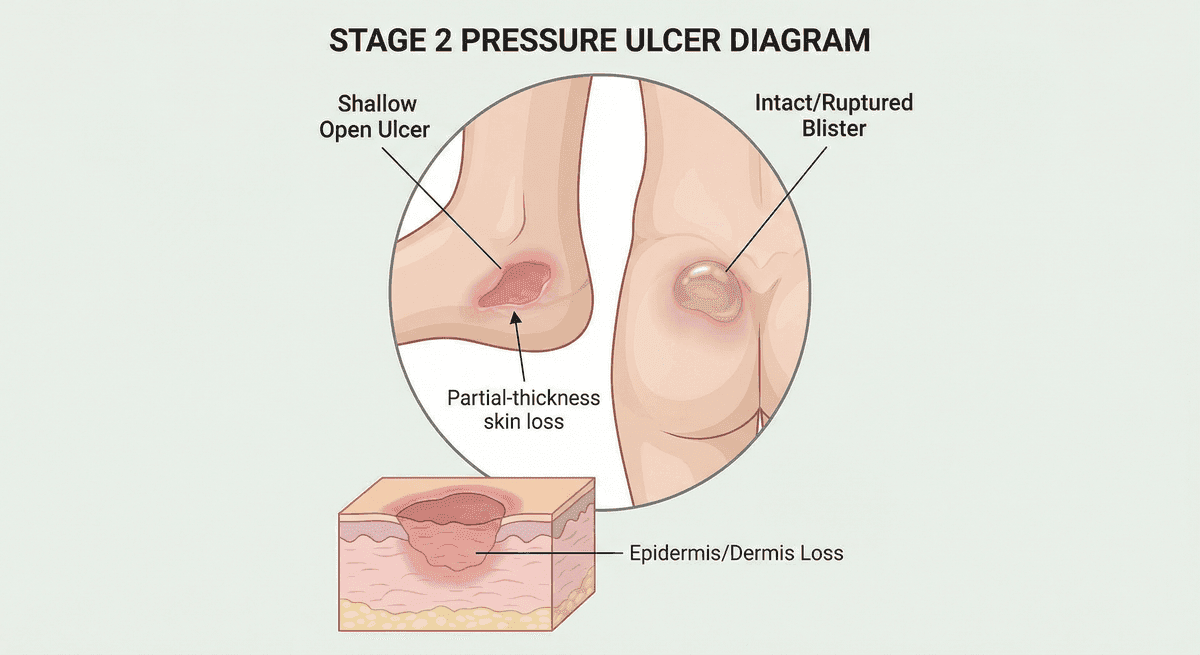
A Stage 2 pressure ulcer is defined by the National Pressure Injury Advisory Panel (NPIAP) as partial thickness loss of skin with exposed dermis. The wound bed is viable, pink or red, and moist. Unlike Stage 1 where the skin remains intact, Stage 2 represents actual tissue breakdown—the epidermis (outer skin layer) has been lost, leaving the dermis exposed.
Stage 2 wounds may also present as an intact or ruptured serum-filled blister. This blistering occurs when friction or shear forces cause the epidermis to separate from the dermis, and fluid accumulates in the resulting pocket.
What Stage 2 is not: Stage 2 should not be used to describe moisture-associated skin damage (like incontinence dermatitis), medical adhesive-related skin injuries, or skin tears. Accurate staging is important for proper treatment and documentation.
How Stage 2 Ulcers Appear
Recognizing a Stage 2 pressure ulcer is important for both healthcare providers and family members monitoring a loved one's care. Key visual characteristics include:
Wound Bed Appearance
- Shallow, open wound with a pink or red wound bed
- The dermis (second layer of skin) is visible but not the fat layer beneath
- Wound bed appears shiny and moist
- No slough (yellow tissue) or eschar (black dead tissue) present
Blister Presentation
- Intact blister filled with clear or blood-tinged serum
- Ruptured blister with thin layer of tissue remaining
- Blister located over a bony prominence or area of pressure
- Surrounding skin may show signs of Stage 1 damage (redness, warmth)
Size and Borders
- Wound edges are typically distinct and well-defined
- Size varies based on duration and location
- May have irregular borders if caused by friction or shear
How Stage 2 Develops from Stage 1
Stage 2 pressure ulcers typically develop when Stage 1 injuries are not properly addressed. Understanding this progression is important for both prevention and accountability:
When a Stage 1 pressure ulcer develops, the tissue beneath the skin is already compromised. If pressure continues without relief, the lack of blood flow leads to cellular death. The epidermis—already weakened—gives way, and the wound opens.
This progression can happen within:
- Hours: In patients with very fragile skin or severe circulatory problems
- Days: More commonly, when routine repositioning is inconsistent
- A week or more: When ongoing care deficiencies allow slow deterioration
In properly staffed facilities with adequate care protocols, Stage 1 ulcers should rarely progress to Stage 2. When they do, it often points to failures in monitoring, repositioning, or wound prevention measures.
Common Locations
Stage 2 pressure ulcers develop in the same high-risk areas as Stage 1 injuries—over bony prominences where pressure concentrates:
- Sacrum and coccyx: The most common location, especially for bedridden patients
- Heels: Particularly vulnerable due to thin tissue over bone
- Hips (greater trochanter): Common in patients who lie on their sides
- Ankles: Often affected when legs rest against each other or bed rails
- Elbows: At risk from friction when patients move themselves in bed
- Shoulder blades: In patients positioned with head elevated
Causes and Contributing Factors
While pressure is the primary cause of all pressure ulcers, Stage 2 wounds often develop due to additional factors that accelerate tissue breakdown:
Friction
When skin rubs against bedding or clothing, it can strip away the epidermis. This is common when patients are dragged rather than lifted during repositioning, or when restless patients move repeatedly against rough surfaces.
Shear
Shear occurs when the skin remains stationary while underlying tissues shift. This happens when patients slide down in bed (especially when the head is elevated) or when they are improperly transferred. Shear forces can damage blood vessels and accelerate tissue breakdown.
Moisture
Prolonged exposure to moisture from incontinence, perspiration, or wound drainage weakens the skin's protective barrier. Combined with pressure, moisture significantly increases the risk of skin breakdown. Proper incontinence care is a fundamental requirement in nursing homes. Learn more about the causes of bedsores and how they can be prevented.
Inadequate Nutrition
Patients who are malnourished or dehydrated have compromised skin integrity and reduced ability to heal. Protein deficiency is particularly problematic, as protein is essential for tissue repair.
Treatment Expectations
Proper treatment of Stage 2 pressure ulcers should begin immediately upon identification. With appropriate care, most Stage 2 wounds can heal within several weeks. Standard treatment protocols include:
Wound Care
- Gentle cleaning of the wound bed with saline or appropriate wound cleanser
- Application of moisture-retentive dressings (hydrocolloids, foams, or transparent films)
- Dressing changes as needed to maintain a moist wound environment
- Protection of intact blisters when possible—opening them increases infection risk
Pressure Relief
- Complete offloading of pressure from the affected area
- Use of specialty support surfaces (pressure-redistributing mattresses and overlays)
- Repositioning at least every two hours, and avoiding positioning on the wound
- Heel suspension devices for heel ulcers
Nutritional Support
- Adequate protein intake (often increased above normal requirements)
- Proper hydration
- Vitamin and mineral supplementation as indicated
- Consultation with a registered dietitian for at-risk patients
Monitoring
- Regular assessment of wound size, depth, and appearance
- Documentation of healing progress or deterioration
- Adjustment of care plan based on wound response
- Prompt reporting of any signs of infection
Signs of Negligence
The development or progression of Stage 2 pressure ulcers often indicates care deficiencies. Warning signs that negligence may be involved include:
- Progression from Stage 1: A documented Stage 1 ulcer that worsened to Stage 2 suggests failure to implement prevention measures
- Rapid deterioration: Stage 2 developing within days of admission or hospital stay points to inadequate skin assessment and prevention
- Multiple wounds: Development of Stage 2 ulcers at multiple sites often indicates systemic care failures
- Delayed treatment: Stage 2 wounds that go untreated or receive inconsistent care
- Poor documentation: Missing records of skin assessments, repositioning, or wound care
- Failure to notify family: Not informing family members when wounds develop or worsen. Review the signs of nursing home neglect
Risk of Progression to Stage 3
Without proper intervention, Stage 2 pressure ulcers can deteriorate to Stage 3, where full thickness skin loss exposes the subcutaneous fat layer. This progression significantly increases:
- Healing time (often months instead of weeks)
- Risk of infection
- Pain and suffering for the patient
- Need for advanced wound care or surgical intervention
- Risk of life-threatening complications like sepsis
Healthcare facilities have a duty to prevent this progression through vigilant wound care and pressure management. Failure to do so may constitute negligence.
When to Seek Legal Help
If your loved one has developed a Stage 2 pressure ulcer or experienced progression from Stage 1 to Stage 2 while in a nursing home, hospital, or other care facility, you may want to consult an attorney if:
- The wound developed despite risk factors being documented on admission
- A Stage 1 ulcer was identified but allowed to worsen
- The facility failed to implement or follow a pressure injury prevention plan
- You were not notified when the wound developed or changed
- The wound is not healing or continues to deteriorate despite treatment
- Staff seem unaware of the wound or its severity
- You have concerns about staffing levels or overall quality of care
At Traction Law Group, we understand that Stage 2 pressure ulcers, while still treatable, represent a failure in the duty of care owed to your loved one. We help families investigate what went wrong and hold negligent facilities accountable. Learn how a bedsore lawyer can help. Contact our team for a free consultation. There is no fee unless there is a recovery.
Documenting Stage 2 Pressure Ulcers
If you observe a Stage 2 pressure ulcer on your loved one, careful documentation strengthens any potential legal case and helps ensure better care going forward:
- Photograph the wound with a timestamp, including a ruler or coin for scale when possible
- Request wound care records including measurements, descriptions, and treatment provided
- Note the date you first observed it and compare to when staff say it was first identified
- Document staff responses when you ask about the wound and its treatment plan
- Track healing progress (or lack thereof) at each visit with photos and notes
- Keep records of all communications with the facility about your loved one's skin condition
This documentation can be invaluable in demonstrating a pattern of neglect if the wound worsens or if you decide to pursue legal action. See our guide on how to document bedsores for detailed steps.
Frequently Asked Questions
- Q. What does a Stage 2 pressure ulcer look like?
- A Stage 2 pressure ulcer presents as partial thickness skin loss with exposed dermis (the second layer of skin). It may appear as a shallow, open wound with a pink or red wound bed, or as an intact or ruptured blister filled with clear or blood-tinged fluid. There is no slough or eschar (dead tissue) in a true Stage 2 wound.
- Q. How long does it take for a Stage 2 bedsore to heal?
- With proper treatment—including pressure relief, appropriate wound dressings, and nutritional support—most Stage 2 pressure ulcers heal within two to four weeks. However, healing can be delayed by infection, continued pressure, malnutrition, or underlying conditions like diabetes. If a Stage 2 wound is not improving within this timeframe, it may indicate inadequate care.
- Q. Can a Stage 2 bedsore get worse?
- Yes. Without proper intervention, a Stage 2 pressure ulcer can progress to Stage 3 (full thickness skin loss exposing fat tissue) or Stage 4 (full thickness tissue loss exposing bone, tendon, or muscle). Advanced pressure ulcers carry serious risks of infection, sepsis, and can be life-threatening. Proper repositioning, wound care, and nutrition are essential to prevent progression.
- Q. Is a Stage 2 pressure ulcer grounds for a lawsuit?
- A Stage 2 pressure ulcer may support a negligence claim if it developed due to inadequate care in a nursing home or hospital—for example, failure to reposition a patient, inadequate skin assessments, or allowing a Stage 1 wound to worsen. If your loved one developed a Stage 2 bedsore while in a care facility, a bedsore attorney at Traction Law Group can evaluate whether negligence was a factor during a free consultation.
- Q. What causes Stage 2 pressure ulcers in nursing homes?
- Stage 2 pressure ulcers in nursing homes typically result from sustained, unrelieved pressure combined with friction, shear, moisture, or inadequate nutrition. Common causes include failure to reposition bedridden residents, improper transfer techniques, poor incontinence management, and insufficient staffing. According to AHRQ and CMS guidelines, facilities must implement prevention protocols for at-risk residents.