What Is a Stage 1 Pressure Ulcer?
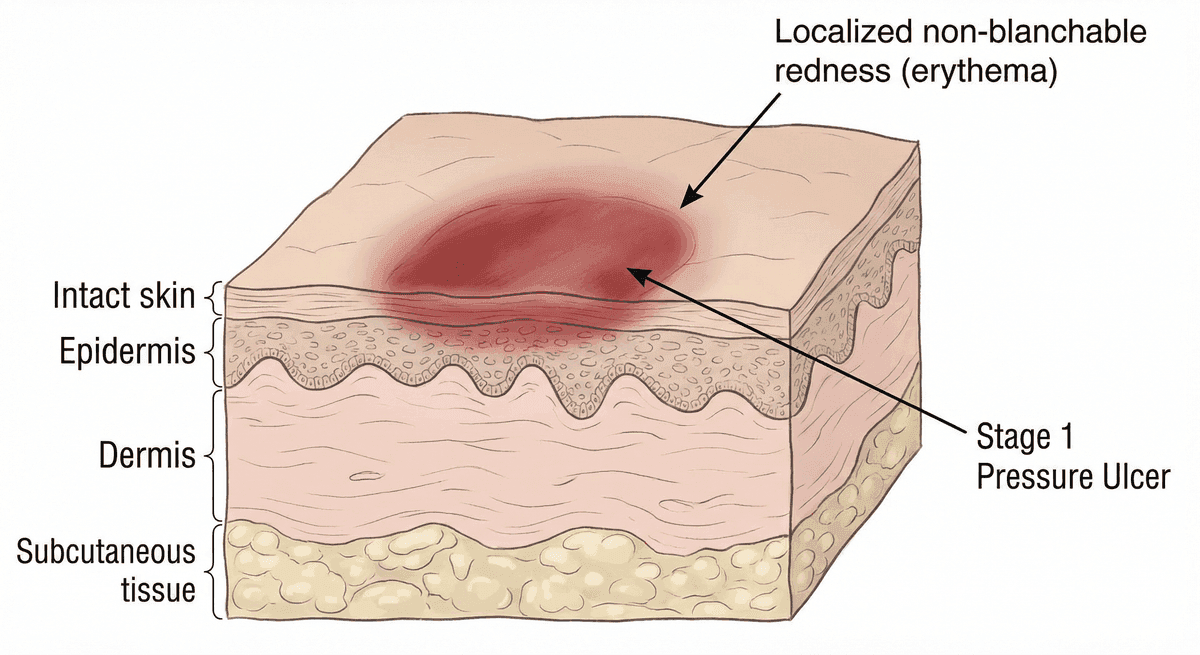
A Stage 1 pressure ulcer represents the earliest identifiable stage of pressure-related skin damage. According to the National Pressure Injury Advisory Panel (NPIAP), Stage 1 is defined as intact skin with a localized area of non-blanchable erythema, typically over a bony prominence. In individuals with darker skin tones, the redness may be more difficult to detect, but the area may appear a different color than surrounding tissue.
The key distinguishing feature of a Stage 1 ulcer is that the skin remains unbroken. Unlike more advanced stages, there is no open wound, blister, or visible tissue damage. However, the underlying tissue has already begun to suffer from inadequate blood flow and oxygen, making prompt intervention necessary.
Blanchable vs. Non-Blanchable Redness
Not all redness on the skin signals a pressure injury. Caregivers and clinicians distinguish between two types of skin redness (erythema): blanchable redness, which is a normal response to pressure, and non-blanchable redness, which is the clinical hallmark of a Stage 1 pressure injury. Learning to tell the two apart is one of the most useful skills a family member or caregiver can develop.
What Is Blanchable Redness?
Blanchable redness (also called blanchable erythema) is the pink or red skin that commonly appears over an area that has been under pressure, for example, after someone has been sitting or lying in the same position for a while. It reflects a normal, temporary increase in blood flow to the area (reactive hyperemia) as circulation responds to the pressure that was just relieved. When pressed with a fingertip, blanchable redness turns white or pale and then quickly returns to red once the pressure is released. On its own, blanchable redness is not a wound and typically fades once the area is kept free of further pressure.
What Is Non-Blanchable Redness?
Non-blanchable redness (non-blanchable erythema) can look similar at first glance, but it behaves differently under pressure: the area stays red, purple, blue, or ashen even when pressed firmly, because the capillaries beneath the skin have already been damaged and can no longer respond normally. According to the National Pressure Injury Advisory Panel (NPIAP), localized non-blanchable erythema over intact skin, usually over a bony prominence, is the defining sign of a Stage 1 pressure injury.
The Finger-Press (Blanch) Test
Caregivers can check which type of redness they're looking at with a simple test:
- Gently press a fingertip on the reddened area for a few seconds.
- Release and watch what happens to the color.
- Turns white, then returns to red: the redness is blanchable, a normal response to pressure.
- Stays red, purple, or discolored: the redness is non-blanchable, a possible sign of a Stage 1 pressure injury.
In patients with darker skin tones, non-blanchable redness can be harder to see. Instead of relying on color change alone, check whether the area feels warmer, cooler, firmer, or softer than surrounding skin, or whether its color simply looks different from the skin around it.
| Feature | Blanchable Redness | Non-Blanchable Redness |
|---|---|---|
| Appearance | Pink or red skin over an area that was recently under pressure | Red, purple, blue, or ashen discoloration, often over a bony prominence |
| When Pressed | Turns white (blanches), then quickly returns to red once released | Stays red, purple, or discolored, and does not turn white |
| What It Indicates | A normal, temporary response to pressure; blood flow is intact | Damaged capillaries beneath the skin, the defining sign of a Stage 1 pressure injury |
| What To Do | Reposition off the area and continue routine repositioning and skin checks | Relieve pressure immediately, document the area, and notify a nurse or physician |
Why This Distinction Matters
The presence of non-blanchable redness, not blanchable redness, is what the NPIAP staging system uses to define a Stage 1 pressure injury: intact skin with localized non-blanchable erythema, typically over a bony prominence. Mistaking non-blanchable redness for "normal" blanchable redness, or failing to check at all, can delay the repositioning, pressure relief, and skin assessments that keep a Stage 1 injury from progressing to an open wound.
When to Alert Care Staff or a Clinician
- The redness does not fade within 30 minutes of relieving pressure
- The area stays discolored after the finger-press test
- The skin feels warmer, cooler, firmer, or softer than surrounding tissue
- The area is located over a bony prominence, such as the tailbone, hip, or heel
- You are unsure and want a nurse or physician to assess the skin directly
How to Identify Stage 1 Pressure Ulcers
Recognizing a Stage 1 pressure ulcer requires careful skin assessment. Healthcare providers in nursing homes and hospitals should perform regular skin checks specifically designed to identify these early warning signs.
The Blanching Test
The primary method for identifying Stage 1 ulcers is the finger-press (blanch) test described above in Blanchable vs. Non-Blanchable Redness. Healthy skin blanches (turns white) when pressed and quickly returns to color. A Stage 1 pressure ulcer does not blanch: the affected area remains red or discolored, indicating the underlying blood vessels have been damaged.
Visual Signs
- Persistent redness that does not fade within 30 minutes after pressure is relieved
- In darker skin tones: purple, blue, or ashen discoloration
- Color that differs noticeably from surrounding skin
- The affected area may appear shiny or taut
Sensory Changes
- The area may feel warmer or cooler than surrounding tissue
- The patient may report pain, burning, or itching at the site
- The tissue may feel firmer (indurated) or softer (boggy) than normal
- Some patients may report numbness or tingling
Common Locations
Stage 1 pressure ulcers most frequently develop over bony prominences where the body's weight creates pressure against the skin. The location often depends on the patient's typical position:
- For patients lying on their back: sacrum (tailbone), heels, shoulder blades, back of the head
- For patients lying on their side: hips (greater trochanter), ankles, knees, ears, shoulders
- For patients in wheelchairs: ischial tuberosities (sitting bones), tailbone, shoulder blades
Proper skin assessments should check all vulnerable areas based on the patient's position and mobility level.
Causes and Risk Factors
Stage 1 pressure ulcers develop when sustained pressure on the skin restricts blood flow to the underlying tissue. Without adequate oxygen and nutrients, the tissue begins to break down. Several factors increase the risk:
Primary Causes
- Immobility: Patients who cannot reposition themselves independently are at highest risk
- Prolonged pressure: Remaining in the same position for extended periods without repositioning
- Friction: Skin rubbing against bedding or wheelchair surfaces
- Shear: Layers of skin moving in opposite directions, often when sliding down in bed
Contributing Risk Factors
- Advanced age and fragile skin
- Poor nutrition or dehydration
- Incontinence (moisture weakens skin integrity)
- Reduced sensation (from diabetes, stroke, or spinal cord injury)
- Poor circulation or cardiovascular disease
- Low body weight or obesity
- Cognitive impairment or inability to communicate discomfort
Prevention at This Stage
The appearance of a Stage 1 pressure ulcer is a warning that demands immediate preventive action. When identified and addressed promptly, Stage 1 ulcers are fully reversible. Prevention strategies include:
Pressure Relief
- Immediately relieve pressure from the affected area
- Reposition the patient at least every two hours (or more frequently if needed)
- Use pressure-redistributing mattresses and cushions
- Keep heels elevated off the bed using pillows or specialized heel protectors
- Avoid positioning the patient directly on the affected area until it has healed
Skin Care
- Keep skin clean and dry
- Manage incontinence promptly with appropriate products
- Apply moisturizers to prevent dry skin from cracking
- Avoid massage over reddened areas (this can cause additional damage)
- Use protective dressings or barrier creams as directed
Nutrition and Hydration
- Ensure adequate protein intake to support tissue health
- Maintain proper hydration
- Consider nutritional supplements if the patient is at risk for malnutrition
What Happens Without Treatment
Without proper intervention, Stage 1 pressure ulcers can rapidly progress to more severe stages. The skin may break down within hours or days, leading to:
- Stage 2: Partial thickness skin loss with exposed dermis, often appearing as a shallow open wound or blister
- Stage 3: Full thickness skin loss with visible fat tissue but no exposed bone, tendon, or muscle
- Stage 4: Full thickness tissue loss with exposed bone, tendon, or muscle—a serious wound that may require surgery
Advanced pressure ulcers are much more difficult to treat, carry a significant risk of infection and sepsis, and in severe cases can be life-threatening.
Standard of Care Requirements
Healthcare facilities have a legal and ethical duty to prevent pressure ulcers. For Stage 1 injuries specifically, the standard of care requires:
- Regular skin assessments upon admission and at least daily thereafter for at-risk patients
- Immediate documentation when Stage 1 changes are observed
- Prompt implementation of a pressure injury prevention care plan
- Notification of the physician or wound care team
- Patient and family education about the condition
- Ongoing monitoring to ensure the condition improves, not worsens
When facilities fail to follow these protocols, and a Stage 1 ulcer progresses to a more serious wound, negligence may be a factor. Learn more about bedsore prevention standards that facilities are required to follow.
When to Seek Legal Help
While Stage 1 pressure ulcers can heal quickly with appropriate care, their presence often indicates larger problems with facility care. You may want to consult an attorney if:
- A Stage 1 ulcer was not identified despite regular assessments being required
- The facility failed to implement preventive measures once Stage 1 was identified
- The ulcer progressed to Stage 2, 3, or 4 due to inadequate care
- Your loved one developed multiple pressure ulcers at different sites
- Staff seemed unaware of the wound or dismissed your concerns
- Documentation of skin assessments or repositioning is missing or incomplete
Stage 1 ulcers that progress to more severe wounds often indicate systemic failures in care—understaffing, inadequate training, or corporate cost-cutting. At Traction Law Group, we help families understand their legal options and hold negligent facilities accountable. Learn how a nursing home bedsore lawyer can help. Contact our team for a free consultation. There is no fee unless there is a recovery.
Documenting Stage 1 Concerns
If you notice signs of a Stage 1 pressure ulcer on your loved one, take these steps:
- Photograph the affected area with a timestamp if possible, including comparison to surrounding skin
- Note the location and describe what you observe (color, warmth, firmness)
- Ask staff what they know about the condition and document their response
- Request the care plan to see what prevention measures are in place
- Monitor for changes at each visit and continue documenting
This documentation can be valuable if the condition worsens and you need to demonstrate that earlier warning signs were present but not properly addressed. For more guidance, see our resource on how to document bedsores.
Frequently Asked Questions
- Q. What does a Stage 1 pressure ulcer look like?
- A Stage 1 pressure ulcer appears as a localized area of non-blanchable redness on intact skin, typically over a bony prominence. The skin does not break or open. In patients with darker skin tones, the area may appear purple, blue, or ashen rather than red. The affected area may also feel warmer, cooler, firmer, or softer than surrounding tissue.
- Q. Can Stage 1 bedsores heal on their own?
- Stage 1 pressure ulcers can heal within a few days when pressure is relieved and proper care is provided, including repositioning every two hours, using pressure-redistributing surfaces, and maintaining good nutrition. However, without intervention, Stage 1 ulcers will not resolve and will likely progress to more serious stages. According to AHRQ guidelines, prompt identification and treatment at this stage is critical.
- Q. Is a Stage 1 bedsore a sign of nursing home neglect?
- A Stage 1 bedsore can indicate inadequate care, especially if the facility failed to conduct regular skin assessments, implement repositioning schedules, or address known risk factors. While not every Stage 1 ulcer results from neglect, a pattern of pressure injuries or progression to more severe stages often points to systemic care deficiencies. Families concerned about a loved one's care should document the condition and consult with a bedsore attorney.
- Q. How quickly can Stage 1 pressure ulcers develop?
- Stage 1 pressure ulcers can develop within hours of sustained, unrelieved pressure on the skin. Patients who are immobile, malnourished, or incontinent are at the highest risk. According to the National Pressure Injury Advisory Panel (NPIAP), regular skin assessments and repositioning at least every two hours are essential to prevent pressure injuries from forming.
- Q. What should I do if my loved one has a Stage 1 bedsore in a nursing home?
- If you notice signs of a Stage 1 pressure ulcer, photograph the area with a timestamp, ask staff about the care plan and repositioning schedule, request copies of skin assessment records, and monitor the area during each visit. If the wound worsens or you suspect inadequate care, contact Traction Law Group for a free consultation to understand your legal options.
- Q. What's the difference between blanchable and non-blanchable redness?
- Blanchable redness turns white when pressed with a fingertip and quickly returns to red once pressure is released, a normal, temporary response to pressure on the skin. Non-blanchable redness stays red, purple, or discolored even when pressed, because the capillaries beneath the skin have been damaged. According to the National Pressure Injury Advisory Panel (NPIAP), non-blanchable erythema over a bony prominence on intact skin is the defining sign of a Stage 1 pressure injury.
- Q. Does blanchable redness mean a pressure ulcer is forming?
- Not necessarily. Blanchable redness is a normal reactive response to pressure and typically fades once the area is repositioned and relieved of pressure. Even so, any reddened area should be monitored closely, since prolonged or repeated pressure on the same site can eventually progress to non-blanchable redness and a Stage 1 pressure injury.
- Q. How do caregivers test whether redness is blanchable or non-blanchable?
- Caregivers can use a simple finger-press (blanch) test: gently press a fingertip on the reddened area for a few seconds, then release. If the area turns white or pale and then quickly returns to red, the redness is blanchable. If it stays red, purple, or discolored with no color change, it is non-blanchable. In patients with darker skin tones, caregivers should also check for changes in warmth, firmness, or texture compared to surrounding skin, since non-blanchable areas can be harder to see.