When healthcare facilities fail to prevent bedsores, families suffer. We help victims and their families pursue justice and accountability for preventable pressure injuries across the United States.
What Are Bedsores and Pressure Injuries?
Bedsores, also called pressure ulcers, pressure injuries, or decubitus ulcers, are wounds that develop when sustained pressure cuts off blood flow to the skin. They typically form on bony areas of the body such as the heels, tailbone, hips, and shoulder blades.
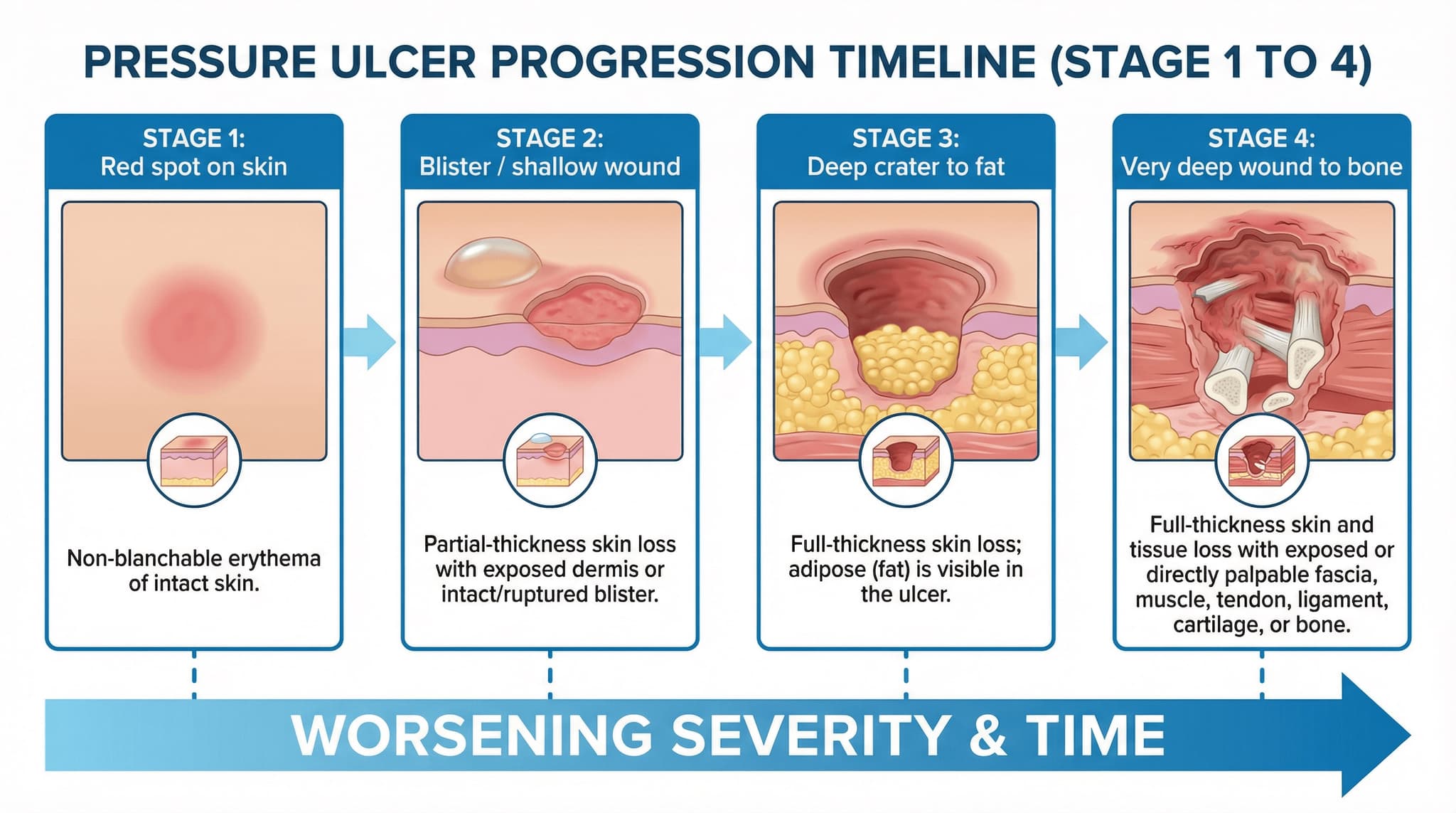
According to the National Pressure Injury Advisory Panel (NPIAP), pressure injuries range from Stage 1 (non-blanchable redness) to Stage 4 (full-thickness tissue loss exposing bone or tendon). Advanced stages can be life-threatening and cause extreme pain and suffering.

Are Bedsores Preventable?
Medical science has long established that bedsores are largely preventable with proper care. Healthcare facilities are expected to:
- Conduct regular skin assessments upon admission and throughout the stay
- Reposition immobile patients every two hours or as clinically indicated
- Provide adequate nutrition and hydration
- Use pressure-relieving mattresses and support surfaces
- Keep skin clean and dry
- Address incontinence promptly
When facilities fail to follow these established protocols, patients develop bedsores that could have been avoided. This failure often constitutes negligence.
Where Does Bedsore Negligence Happen?
Bedsores can develop in any healthcare setting where patients receive extended care, including:
Nursing Homes and Long-Term Care Facilities
Nursing home residents are particularly vulnerable because many have limited mobility, chronic health conditions, and cognitive impairments. Understaffing, inadequate training, and corporate cost-cutting often contribute to neglect. Learn more about nursing home bedsore lawsuits.
Hospitals
Hospital patients, especially those in intensive care units or recovering from surgery, can develop pressure injuries within hours if not properly monitored and repositioned. Hospital-acquired pressure injuries (HAPIs) are a recognized quality measure that hospitals are expected to prevent. Read about hospital-acquired pressure injury claims.
Rehabilitation Centers and Assisted Living
Patients in rehabilitation or assisted living facilities also face risk if staff fails to provide adequate preventive care during recovery periods.
Stages of Bedsores and Why Severity Matters
The staging of bedsores helps medical professionals assess severity and plan treatment. From a legal perspective, the stage at which a bedsore is discovered often indicates how long the wound has been developing without intervention.
- Stage 1: Intact skin with non-blanchable redness. Early detection can prevent progression.
- Stage 2: Partial thickness skin loss with exposed dermis. Indicates the condition is worsening.
- Stage 3: Full thickness skin loss. Fat may be visible. This stage often suggests prolonged neglect.
- Stage 4: Full thickness tissue loss with exposed bone, tendon, or muscle. Extremely serious and often indicates severe, prolonged negligence.
- Unstageable: Full thickness loss where the wound base is obscured by slough or eschar.
- Deep Tissue Injury: Purple or maroon discoloration indicating damage beneath the skin surface.
Complications: Infection, Sepsis, and Death
Bedsores are not just painful wounds. Left untreated or poorly managed, they can lead to severe, life-threatening complications:
- Infection: Open wounds are vulnerable to bacterial infection, which can spread to surrounding tissue.
- Cellulitis: Infection of the skin and underlying tissue causing swelling, redness, and fever.
- Osteomyelitis: Bone infection that can occur when Stage 4 ulcers expose bone tissue.
- Sepsis: A life-threatening condition where infection spreads to the bloodstream, causing organ failure and death.
When bedsore complications lead to death, families may pursue wrongful death claims against the responsible facility.

When Does a Bedsore Become a Lawsuit?
Not every bedsore results in a viable legal claim. However, legal action may be appropriate when evidence shows both of these:
- A healthcare facility failed to meet the standard of care.
- That failure caused or contributed to the development or worsening of a pressure injury.
Key factors in bedsore lawsuits include:
- Evidence that the facility knew or should have known about the patient's risk
- Failure to implement appropriate prevention protocols
- Delayed detection or treatment of wounds
- Inadequate staffing or training
- Falsification or poor documentation of care
Who Can Be Held Liable for Bedsores?
Multiple parties may bear responsibility for bedsores caused by negligence:
- Healthcare Facilities: Nursing homes, hospitals, and rehab centers can be held liable for systemic failures in care.
- Corporate Owners: Many nursing homes are owned by large corporations that set staffing levels and budgets.
- Individual Staff Members: Nurses, aides, and other caregivers may be personally liable in some cases.
- Medical Directors: Physicians overseeing care may be liable if they failed to properly supervise treatment.
How We Help Families Nationwide
At Traction Law Group, we review bedsore claims from victims and their families across all 50 states. Our approach focuses on:
- Thorough Investigation: We obtain medical records, facility staffing data, and incident reports to build a strong case.
- Medical Consultation: We work with healthcare professionals to understand how the standard of care was breached.
- Compassionate Advocacy: We understand the emotional toll these cases take and provide supportive, responsive representation.
- No Upfront Costs: We work on contingency, meaning you owe nothing unless we recover compensation for you.
If your loved one suffered from preventable bedsores, you do not have to face this alone. We are here to help you pursue accountability and justice.