Why Documentation Matters
Thorough documentation serves several important purposes. It helps healthcare providers understand the wound's progression and adjust treatment. It creates a record of the injury that can show how the wound developed over time. And if negligence is suspected, clear documentation can help establish what happened, when it happened, and whether proper care was provided.
The best time to start documenting is as soon as you discover the bedsore. However, it is never too late to begin keeping records. Memories fade, but written documentation and photographs provide a reliable record of events.
Photo Documentation Best Practices
Photographs provide visual evidence of the wound's condition at a specific point in time. Taking effective photos requires attention to lighting, angle, and context.
Camera and Lighting
- Use the best camera available (a smartphone camera is usually sufficient)
- Ensure good lighting—natural light or bright indoor lighting works best
- Avoid using flash directly on the wound, as it can wash out details or create shadows
- If possible, take photos at the same time of day for consistency
Positioning and Angles
- Take photos directly perpendicular to the wound (straight on) for accurate size representation
- Also take photos from different angles to capture depth and the surrounding tissue
- Include enough of the body to show the wound's location (for example, if on the hip, include enough of the body to clearly identify the hip area)
- Be respectful of your loved one's dignity and comfort
Size Reference
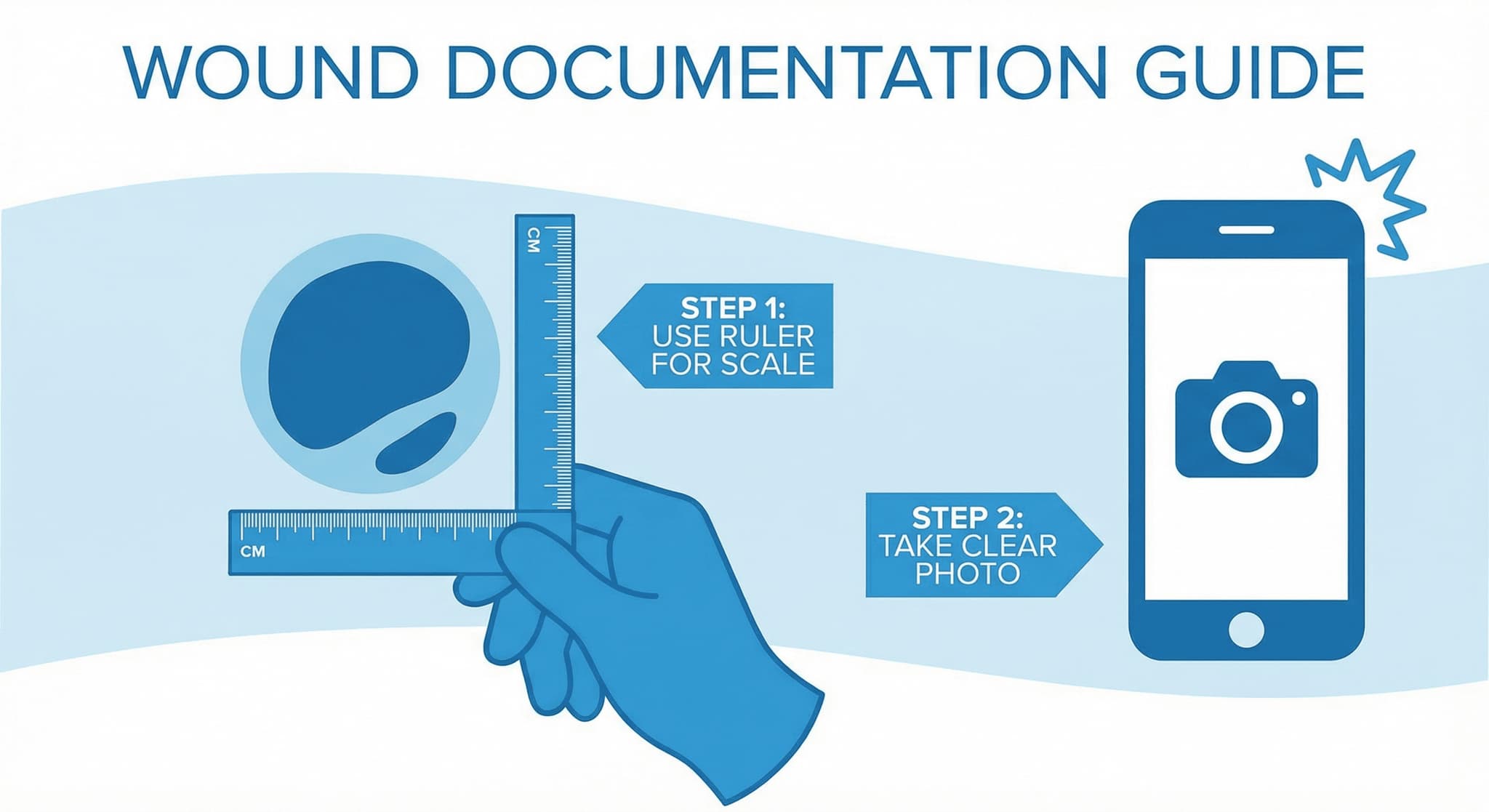
Always include a size reference in at least one photo. This helps show the actual dimensions of the wound.
- A ruler or measuring tape placed next to (not on) the wound is ideal
- If no ruler is available, use a common object of known size: a coin, a credit card, or a cotton swab
- Healthcare facilities may use wound measurement guides—ask if one is available
Date and Time Stamps
- Enable the date/time stamp feature on your camera or phone if available
- If not available, take a photo of a piece of paper showing the date and time before each session
- Keep a written log matching each photo to a specific date
- Do not alter the original photo files—the metadata contains useful timestamp information
What to Photograph
- The wound itself: Capture the wound bed, edges, and any visible tissue
- Surrounding skin: Document redness, swelling, or discoloration around the wound
- Wound location: Show where on the body the wound is located
- Drainage or discharge: If present, photograph before cleaning if possible
- Dressings: Photograph dressings before removal to document the type and condition
Ongoing Photo Documentation
Continue taking photographs regularly to track changes over time. Consider photographing:
- At least weekly, or whenever you visit
- Whenever you notice a significant change (better or worse)
- After dressing changes when the wound is visible
- Before and after any medical procedures
What Information to Record in Writing
Written notes complement photographs by capturing details that photos cannot show. Keep a dedicated notebook or digital document for this purpose.
Wound Description
For each observation, record:
- Date and time of your observation
- Location on the body (be specific: "left heel," "sacrum," "right hip")
- Size in inches or centimeters (length x width x depth if visible)
- Appearance: Color of wound bed, presence of any tissue types
- Drainage: Amount, color, and odor (if any)
- Surrounding skin: Redness, warmth, swelling, discoloration
- Pain: Does your loved one report pain at the site?
Care Observations
Document what you observe about the care being provided:
- Is your loved one being repositioned? How often?
- What type of mattress or cushion is being used?
- Are dressings being changed? How often? What type of dressings?
- Is the wound being cleaned? What products are being used?
- Is a wound care specialist involved?
Staff Interactions
Keep a log of every conversation you have with facility staff about the bedsore:
- Date and time of the conversation
- Name and title of the person you spoke with
- What was discussed: Questions you asked and answers you received
- Any promises or commitments made by staff
- Your concerns that you raised
If possible, follow up verbal conversations with a written email or letter summarizing what was discussed. This creates a paper trail.
Medical Records to Request
Under federal law (HIPAA), patients and their authorized representatives have the right to access medical records. Facilities must provide copies within 30 days of a written request.
Key Records to Request
- Admission assessment: Initial skin assessment and risk evaluation
- Care plan: The plan for preventing and treating pressure injuries
- Nursing notes: Daily documentation of care provided
- Wound care records: Documentation specific to wound treatment
- Repositioning logs: Records showing how often the patient was turned
- Physician orders: Orders for wound care, special mattresses, nutrition
- Wound measurements: Periodic measurements and staging assessments
- Photographs: Any photos taken by the facility
- Lab results: Tests related to infection, nutrition, or blood sugar
- Consultation notes: Notes from wound care specialists, dietitians, or other consultants
- Incident reports: Reports of any falls, accidents, or unusual occurrences
How to Request Records
- Submit your request in writing (the facility may have a specific form)
- Specify that you want all records related to your loved one's care
- Request records in both paper and electronic format if available
- Keep a copy of your request with the date you submitted it
- Follow up if you do not receive records within the legally required timeframe
What to Look For in Records
When reviewing medical records, pay attention to:
- Gaps in documentation (missing days, missing entries)
- Whether the documented care matches what you observed
- Changes in wound stage or size over time
- Whether physician orders were followed
- Staffing levels and who provided care
- Any late entries or corrections to records
Witness Information
Other people may have observed your loved one's condition or the care they received. Their observations can be valuable.
Potential Witnesses
- Family members who visited at different times
- Friends who visited the facility
- Other residents or their family members
- Current or former staff members
- Private caregivers or aides
- Clergy or volunteers who visited
Information to Collect
For each potential witness, record:
- Full name and contact information
- Relationship to your loved one or the facility
- Dates they visited or worked at the facility
- What they observed about your loved one's condition
- What they observed about the care being provided
- Any concerns they expressed at the time
Ask witnesses to write down their observations while memories are fresh. A written statement with a date and signature can be valuable later.
Creating a Timeline
A chronological timeline helps organize events and shows how the situation developed over time. This can be especially helpful when discussing the case with an attorney or medical professional.
Timeline Elements
Your timeline should include:
- Admission date: When your loved one entered the facility
- First discovery: When the bedsore was first noticed (by staff or family)
- Stage progression: When the wound was classified as each stage
- Treatment changes: When new treatments were started or stopped
- Complications: When infections or other complications developed
- Hospitalizations: Any transfers to hospitals for treatment
- Conversations: Key discussions with staff or administration
- Complaints filed: Dates of any formal complaints
- Significant observations: Other notable events
Creating the Timeline
- Use a spreadsheet, document, or calendar format
- List events in chronological order
- Include the date, what happened, and the source of information
- Update the timeline as new events occur
- Attach or reference supporting documents (photos, records, notes)
Preserving Evidence
Evidence can be lost, altered, or destroyed over time. Taking steps to preserve documentation protects the integrity of your records.
Digital Evidence
- Back up photos to multiple locations (computer, cloud storage, external drive)
- Do not edit original photos—if you need to crop or enhance for viewing, save as a copy
- Preserve metadata by not altering file names or dates
- Screenshot text messages or emails related to your loved one's care
- Save voicemails from the facility (record to audio file if possible)
Physical Evidence
- Keep original documents in a safe, dry location
- Make copies of important documents to use for reference
- If you receive any physical items from the facility (dressings, equipment), photograph and preserve them
Organizing Your Records
- Create a dedicated folder or binder for all documentation
- Organize by date or by type of document
- Create an index or table of contents
- Keep originals and copies in separate locations
When to Seek Professional Help
If you have documented evidence that suggests your loved one received inadequate care, you may want to consult with a bedsore attorney. An attorney can:
- Review your documentation and advise on its completeness
- Help obtain additional records through legal discovery
- Engage medical experts to review the care provided
- Advise whether you have a potential legal case
- Handle legal proceedings while you focus on your loved one's care
At Traction Law Group, we provide free consultations to help families understand their options. If we take your case, there is no fee unless we recover compensation for your family. Learn more about bedsore lawsuits.
Quick Documentation Checklist
Use this checklist to ensure you are capturing important information:
- Photos: Clear, well-lit photos with size reference and date
- Written description: Location, size, appearance, drainage, odor
- Care observations: Repositioning, dressings, mattress type
- Staff conversation log: Names, dates, what was discussed
- Medical records: Request submitted, records received
- Witness information: Names, contact info, observations
- Timeline: Chronological record of key events
- Backup: Photos and documents saved in multiple locations